Article: Made-to-measure: from cloth to fitting
Made-to-measure: from cloth to fitting
A made-to-measure suit starts with an existing pattern that is adjusted for the person who will wear it. That distinction matters. Ready-to-wear starts with a finished garment; bespoke generally involves a pattern developed for an individual. The labels describe approaches, not an automatic ranking of how good a finished suit will look. The result depends on the pattern, the maker, the cloth, the fitting, and the conversation that connects them.
The outline below explains the usual decisions in made-to-measure tailoring. Individual makers work differently. It is not a promise about Wm. Fox fitting stages, delivery dates, or what a particular order includes. Those details should be confirmed before an order is placed.
Begin with the job the suit must do
Before opening a cloth book, explain how you plan to wear the suit. A weekly office suit, a wedding suit, and a travel suit may share a color but demand different choices. Consider whether you spend most of the day sitting, whether the jacket will be worn separately, and what shoes you already own. Bring photographs if they help explain a preference, but treat them as a starting point rather than a pattern to reproduce without adjustment.
A useful consultation also covers what you dislike about your current clothes. A collar that lifts, trousers that catch at the calf, or a jacket that feels tight while driving gives the fitter something concrete to investigate. Bring a familiar suit if possible. How that garment behaves on you can be more informative than a list of measurements alone.
Establish a starting shape
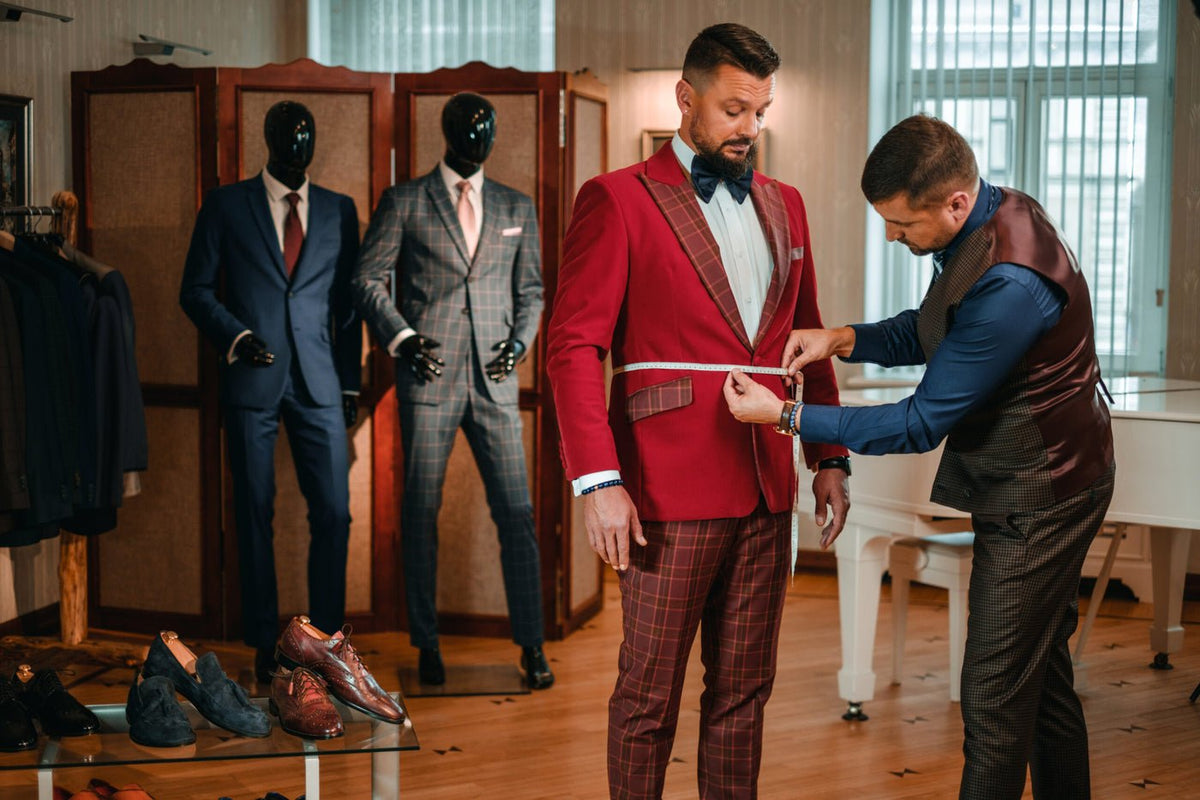
The fitter considers an existing model or fitting garment and evaluates its relationship to your body. Shoulder shape, posture, chest, waist, seat, and balance all matter. Two people with the same chest measurement can need different adjustments. A tape measure records size; trying on a garment reveals how that size is distributed and how the cloth hangs when you stand naturally.
Try not to hold an unusually straight posture for the mirror. Stand as you normally do, then sit and move. A suit must work between photographs. The fitter may assess sleeve pitch, jacket length, trouser rise, and the position of the waist. Some changes are within a maker's made-to-measure system and some are not. Ask about the limits early rather than assuming every detail can be changed.
Choose cloth by use, then by appearance
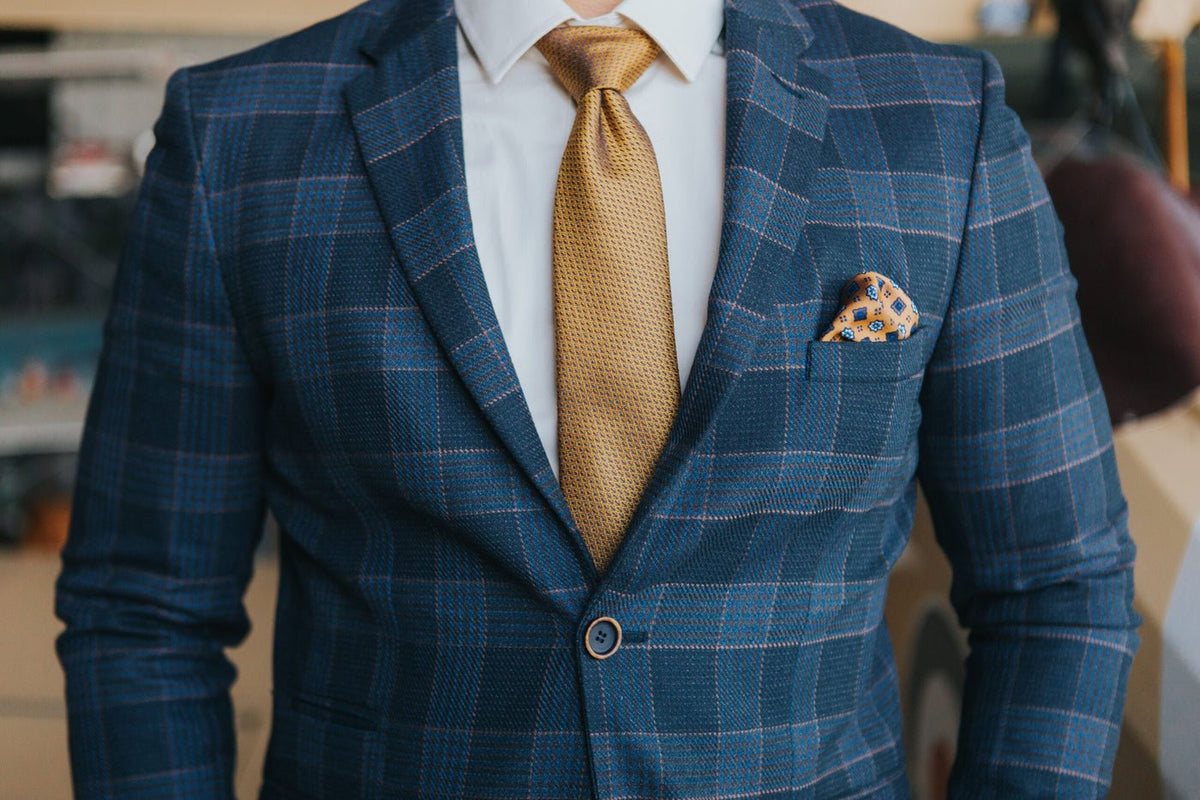
Color and pattern are visible immediately, but weight, weave, and finish deserve equal attention. A smooth navy cloth may be useful for business. A more textured cloth can change the same basic shape into something less formal. Hold a larger sample against your shirt when possible. Small swatches make patterns appear quieter than they can look across a whole jacket.
Ask what the cloth is made from and how it should be cared for. A high Super number is not a guarantee of a better everyday suit, and a lighter cloth is not automatically the most comfortable choice in every climate. Think about the environments in which you actually spend time, including air-conditioned rooms and your commute. Record the chosen cloth reference so there is no ambiguity later.
Decide on the details as a whole
Lapel shape, pockets, vents, buttons, lining, and trouser details should form one coherent garment. Start with the level of formality. A restrained business suit and eveningwear have different conventions. Then consider proportion. A lapel does not exist by itself: its width works with the shoulder, chest, button position, and the shape of the jacket front.
Trousers deserve the same attention as the jacket. Discuss rise, pleats or a flat front, side adjusters or belt loops, leg shape, and the amount of break at the shoe. Avoid choosing details simply because they are available. If a familiar feature works for your day, keeping it can be a better decision than adding a novelty that makes the garment harder to wear.
Confirm the order before production
Review the specification together. Confirm the cloth, model, selected details, expected fitting process, price, and any event deadline. Ask what happens if further adjustments are required and which decisions become difficult to change once cutting begins. Keep the answers with your order information. Clear expectations are part of a good fitting experience, not an administrative afterthought.
The adjusted pattern then guides cutting and assembly. Components are joined, internal structure is added according to the maker's method, and the garment is pressed and finished. Canvas construction can help give a jacket its shape, but construction descriptions should be verified for the actual garment. They are not a substitute for seeing how the jacket sits on you.
Evaluate the finished garment in motion
At the fitting, wear the shirt and shoes you expect to use with the suit. Check the collar, shoulders, front closure, sleeve length, and overall balance. Trousers should be assessed from the front, side, and back. Sit down and walk. There should be enough room for ordinary movement without losing the intended line.
Tell the fitter what you feel as well as what you see. A pressure point may not be obvious in a mirror. Equally, an unfamiliar but comfortable silhouette may need a little time before you decide whether it is right. Ask the fitter to explain proposed alterations and their effects on neighboring areas. Shortening one part of a garment can change the proportions of the whole.
Keep a record and wear it
Once the fit is settled, note what works and what you would change on a future order. Wear the suit in the situations it was made for. A useful wardrobe develops through experience, not just a successful fitting-room photograph. Follow the care instructions, use an appropriate hanger, and give the garment room in the closet.
For a first appointment at Wm. Fox, bring your intended occasion, a useful reference garment, and any deadline. We can discuss the available made-to-measure options and confirm the practical details before you order. Explore made-to-measure or request a fitting.